
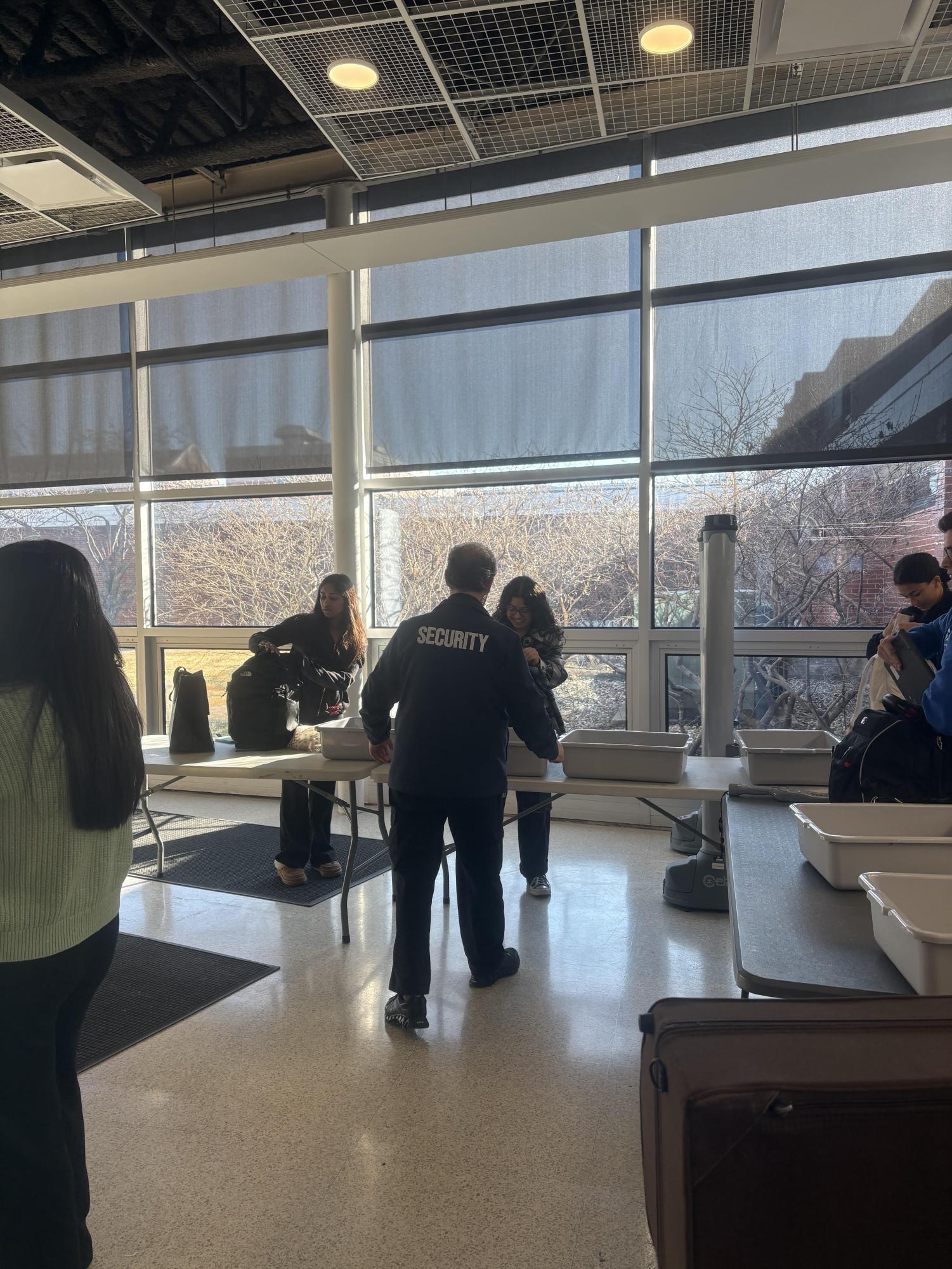
If you’re a student at Highland Park High School, there is no doubt that you have been pulled aside at some point shortly after entering the school to empty your bag and complete the ‘walk-of-shame’ through the weapon detectors. Alongside this system is Sue, a K9 weapon-detecting dog. He has quickly become one of the most recognizable faces at Highland Park High School. While the selection process is random, the intentions behind its creation are far more deliberate.
Starting in 2023, Highland Park instituted their very own weapon detection system following increasing safety concerns, especially in relation to the catastrophic 4th of July shooting. Within the blink of an eye, the HP community had been turned entirely upside down, leaving many citizens deeply shaken and forced to confront the harrowing reality of gun violence. Although the tragedy did not take place directly at school, its effects made brutality feel both closer to home and harder to ignore. Since then, increased security measures have become more agreeable for many local students and families. Here, the goal is to help the community feel safer as it continues to heal.
Still, the new routine has sparked mixed reactions in the hallways. Some students find the detectors frustrating, even an inconvenience, during already rushed mornings. Being pulled aside for additional screening often results in students arriving late to class or feeling singled out. Others worry that the system changes the school’s atmosphere and makes it feel less trusting. Freshman Otis Smithenry-Myers has doubts about the system’s practicality. He believes “it isn’t effective due to the way it’s implemented. It’s really only efficient if everyone had to go through it like TSA, which would cause insane traffic problems”. Overall, he thinks “they need to reassess how the idea is implemented.”
Junior Nia Zwart understands both perspectives. While she admits the process can be disruptive, she also understands why the school felt the need to take action. Like many students, she has grown up seeing frequent news coverage of school violence across the country. To her, the detectors show that safety is being taken seriously.
“It makes me stressed at first because there’s a lot you need to get out of your backpack,” Zwart said. “But afterwards, I feel better knowing the school is doing its best to keep us safe.”
Sue, in particular, has become a source of reassurance for many students. While some were unsure at first about the presence of a weapon-detecting dog, seeing him each morning has become routine. His calm behavior has helped ease nerves and made the entry process feel more normal.
The discussion surrounding the weapons detection system reflects a larger conversation happening across the country about school safety. Students continue to question what protection should look like and how it fits into their everyday lives. A measure implemented by District 113 and many other schools is ALICE Training. The active shooter response training program stands for alert, lockdown, inform, counter, and evacuate. Every student can remember active shooter drills all the way back to elementary school, before we were old enough to understand the gravity of the situation. The drills have been adapted frequently to adjust to the needs of schools, and the weapons detection system is just the newest security measure on top of many pre-existing strategies. While the system itself is far from perfect, it doesn’t stand alone and therefore does not need to be perfect. Many gears are turning behind the scenes to keep students safe.
As Highland Park High School adjusts to these changes, metal detectors, K9’s, and routine searches have become part of the school’s daily rhythm. Whether students see it as helpful or disruptive, it has changed the way mornings begin and reflects the reality students are now forced to grow up in.