

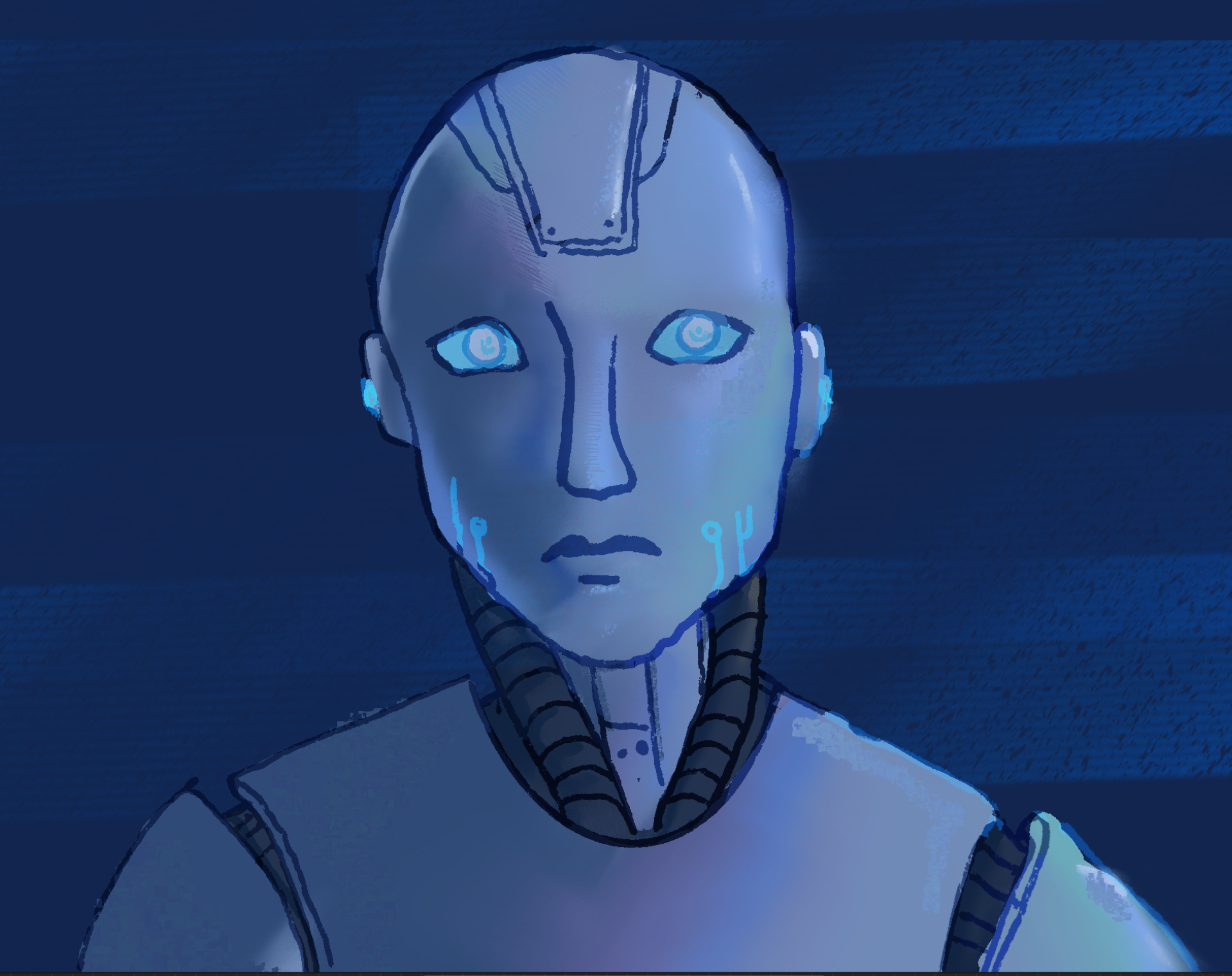
Since ChatGPT’s initial release in November of 2022, the world has seen an immense shift in how artificial intelligence is utilized. It has become prominent in nearly every field, despite being considered a futuristic concept as recent as a few years ago. Now, however, Artificial Intelligence (AI) has become an integral part of society, aiding people in all aspects of life. Naturally, ChatGPT has quickly become a go-to tool for students looking for a quick answer or a detailed study guide, or a cheat-code for a math worksheet. As students turn more to AI for a speedy source of information, its place in the classroom continues to be debated.
It’s indisputable that AI has taken the world by storm, quickly changing the learning landscape. AI can be used for numerous activities, including clarifying problems, breaking down abstract concepts, or encroaching on students’ abilities to work independently. With ChatGPT’s great strengths and vices, school administrators must balance the importance of maintaining academic integrity while enhancing education through the flexibility of AI.
“The way that most students use AI to cheat or make homework go faster is not helpful at all,” shared Sofia Wisner, a sophomore at Highland Park High School. “It probably will cause problems in the future. Honestly, I don’t think it’s AI’s fault but more the students’ fault, because of how they choose to use it in the classroom.”
When ChatGPT first began to gain traction in 2023, many districts throughout New York, Seattle, and Los Angeles immediately implemented AI bans in fear of cheating and academic dishonesty. However, these bans were soon lifted later on in the year, with new hopes of adopting AI to improve both classroom learning and administrative efficiency.
I told [my students] to use AI to generate either a wanted poster or a resume for a particular element…It was hysterical. It processed the whole thing in like two minutes,” says Barbara Obinger, a chemistry teacher at Highland Park High School. “That was a fun use of AI. I’m exploring it because I don’t want to rule it out just because I don’t know how to do it.”
Due to its prevalence and expansive range of usage, many schools and experts are tasked with the challenge of creating new AI policies.
“I don’t think you can just ban it altogether because students need to know how to use it, it is going to be a part of your future and there’s no way around that… I think students need to understand very clearly when they are allowed to use it and when it is considered not okay and if the school doesn’t make that policy clear, then we have a problem,” said Obinger.
While it’s unrealistic to pretend AI doesn’t bring a whole new set of complexities to the learning environment, it is also impractical to hinder one’s usage of such a powerful resource in a modern society. AI is simply the latest development in our ever-changing world, and now, a skill students need to learn. Instead of worrying about what kids could do, administrators must set a realistic expectation as to how it can be used in a helpful and ethical manner.
Teachers are uniquely positioned to influence how kids view and use AI. They can mentor students in their usage of AI, while maintaining efforts to reach new heights of efficiency, adaptability, and flexibility. Through a combination of carefully thought-out policies and leadership, AI can transform from an unknown variable into an essential learning tool.