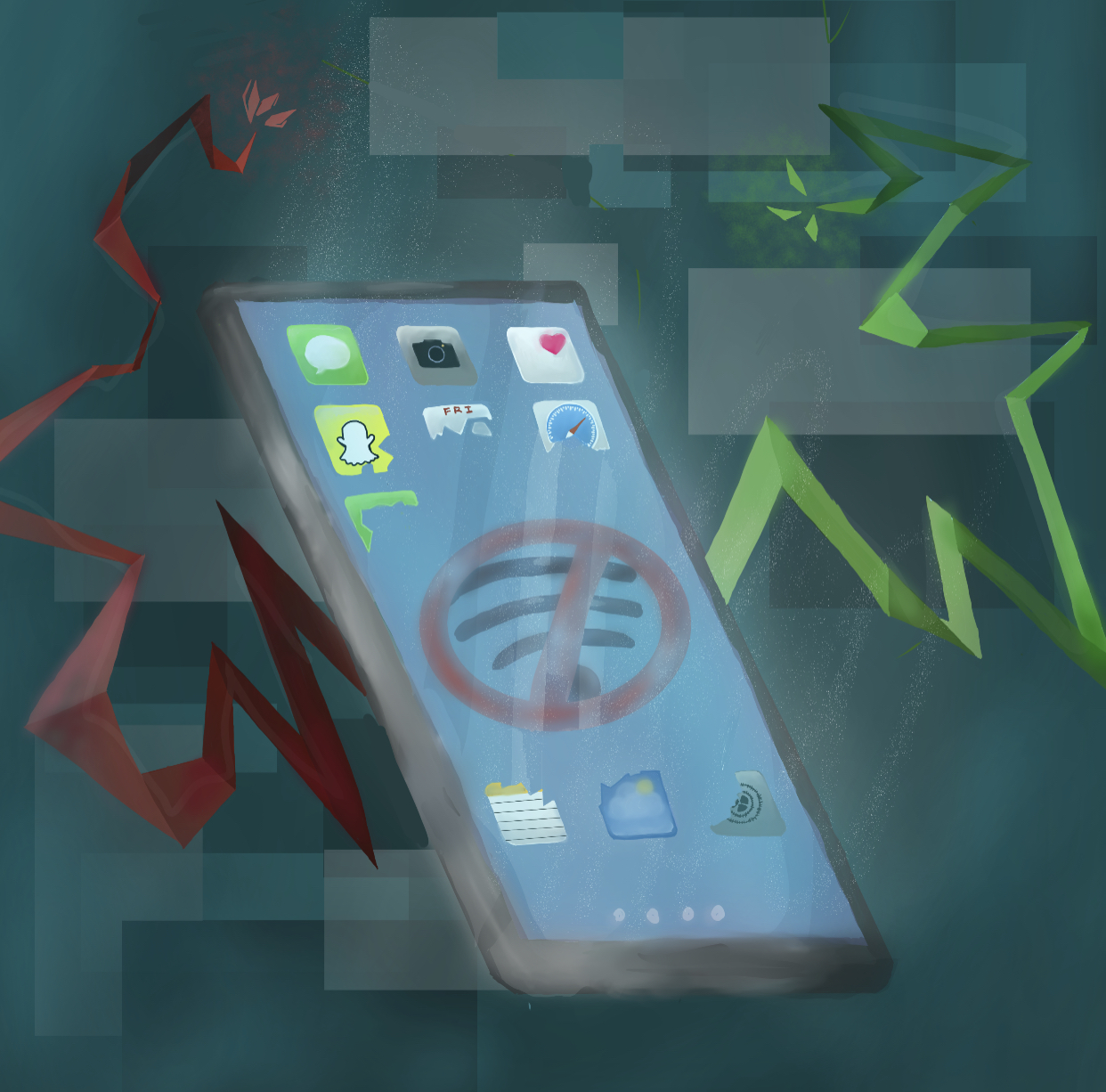
This fall, District 113 has introduced a new district-wide cell phone policy, pitched with the motto, “No Cell Bell to Bell”. Students at Highland Park High School (HPHS) and Deerfield High School (DHS) will not be able to use their cell phones during instructional time, which means no phone use during classes, assemblies, or support periods. At the start of every class period, students are required to place their phones in pouches, stored in organized racks in every classroom, with phones either silenced or on airplane mode. While these implementations have been met with much skepticism from HPHS students, the district justifies its new policy under the need for enhanced accountability and safety measures.
Along with the phone restrictions, the district is also requiring 9th and 10th-graders to use district-issued Chromebooks during class. This development comes as a shock to most, as many students are accustomed to using their personal computers during the school day. Upperclassmen can still use personal computers during class time for now, but all students will eventually need to switch to district-issued devices.
In conjunction with the cell phone ban, teachers hope that these restrictions will help break down numerous privacy issues in the past, such as the usage of artificial intelligence and the spread of unregulated information that students share online. These decisions are backed up by a network of professional research, like the opinion of Dr. Turner, a pediatrician who specializes in child brain research at University Hospital. “It allows them to be present and to interact,” states Dr. Turner, when talking about cell phones being put away while students are in class. Behind the scenes, the associate superintendents of D113 have been researching cellphone policies like these for years. However, the policy’s success depends on the teachers buying into it.
Luckily, HPHS administrators are not backing down from enforcing the tech ban. Dean Rome expressed that “It is like the nonnegotiables for our students. We implemented that for the staff that everybody’s got to keep the phone in the pouch”. Principal Holly Fleischer also shared similar sentiments. Her weekly newsletter addressed the new changes, making sure to emphasize how “this change is part of our ongoing efforts to foster access, belonging, and achievement within inclusive learning environments.”
As this school year begins, the new policy will need some getting used to by the students. Some may be glad to enter a more focused, disciplined academic environment, while others may be frustrated by the change. Although District 113 administrators believe that the cell phone policy will create an enhanced learning environment, students and teachers are still waiting to see how it will all play out. Whether or not the new policy leads to benefits or added challenges, it is certain that the way we use technology at school is changing.