
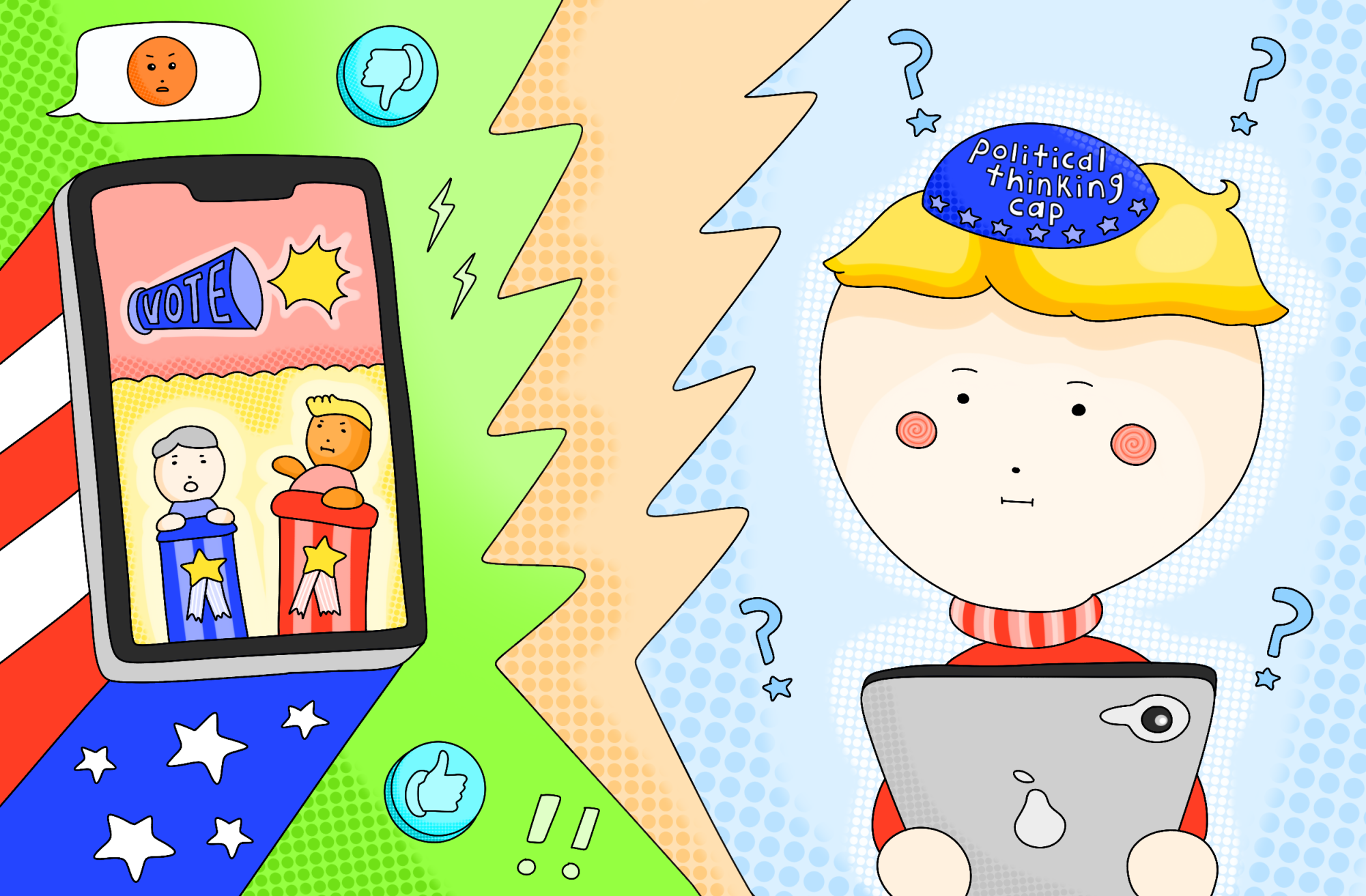
For the youth of America, politics may feel like a distant topic, one concealed from us as a method of “protection” from the complexities of adulthood. Maybe politics is something you’ve seen your parents discuss with each other, or heard debated at family gatherings while you were too busy playing Just Dance in the basement. In essence, young people are often deliberately kept out of political conversation because of the belief that politics are meant to be discussed by only one demographic: adults.
To be honest, this notion was easy to comprehend as a young child. Being told not to answer the door to strangers blocked off any opportunity to be in contact with a group of canvassers – people who follow the classic door-to-door political campaigning mechanism. Furthermore, many seven-year-olds do not even understand the extensive and often confusing vocabulary used in the political sphere. Terms like partisan, bipartisan, mandate, and constituency make it hard to get involved in political discourse in the first place, to the point where politics feels inaccessible.
This all changed, however, with the development of social media and the subsequent rise of campaigning through technology. Here, youth have begun to encounter political messages earlier and more frequently, making political engagement almost unavoidable. In the 2025 election, both Democratic and Republican parties used platforms like TikTok and Instagram to promote their campaign, clearly targeting younger audiences. In July of 2025, former Vice President and Presidential nominee Kamala Harris was one of the largest proponents of social media marketing, transforming her entire campaign’s online presence to embrace a social media trend inspired by iconic pop star Charli XCX’s ‘Brat’ album cover. This was driven by her social media team, led by members such as Lauren Kapp, a democratic digital strategist who just so happens to be the managing partner and cofounder of Luminary Strategies, a Gen Z digital agency.
This moment marked a significant turning point in the election. Suddenly, politics was no longer a conversation confined to adults; it was being openly delivered to younger audiences.
While the drive for social media outreach is often associated with Democrats, Republicans have also contributed to this movement. For example, current president Donald Trump is extremely active on TikTok, his account being at the fingertips of people of all ages. He often promotes his political decisions on TikTok, one time even posting a video at his desk in the Oval Office, saying, “To all of those young people of TikTok, I saved TikTok so you owe me big.” Both parties clearly recognize the enormous influence of youth and are purposefully tailoring their message to engage and persuade a demographic of people that, for a long time, was predominantly out of reach.
Kourtnie Halperin, a junior at HPHS, sees the impact on younger audiences as well.
“I think that campaign marketing strategies are more effective when marketed to the younger generations because many of the issues that are addressed directly impact people my age,” Halperin said. “For example, topics like abortion may not be as prevalent for an 80-year-old man as they would be for a 16-year-old girl.”
As political campaigns continue to evolve, it is clear that the gap between youth and politics is slowly closing, thanks to social media. Shannon Murray, science teacher at HPHS sees this phenomenon in her own children.
“Because of my children’s access to social media, they are constantly exposed to what’s happening both in our country and around the world,” Murray said. “This allows them to engage, form opinions, and think critically about the issues they care about, which naturally leads to greater political interest and involvement than in previous generations.”
Even without the ability to vote, it has become popular (especially during the most recent election) for youth to use their voice on what they think is right. As a launching pad for collaboration, social media creates a community where teens can share their political opinions with followers, participate in heated comment-section debates, or even make up creative ways to spread awareness about a subject. With this, younger generations are no longer waiting for their turn to understand the complexities of politics. Instead, they are shaping the political landscape right from the screen of their phone.